
How to Request an Artificial Flower Quote or Find a Similar Product
FSARCAN ·
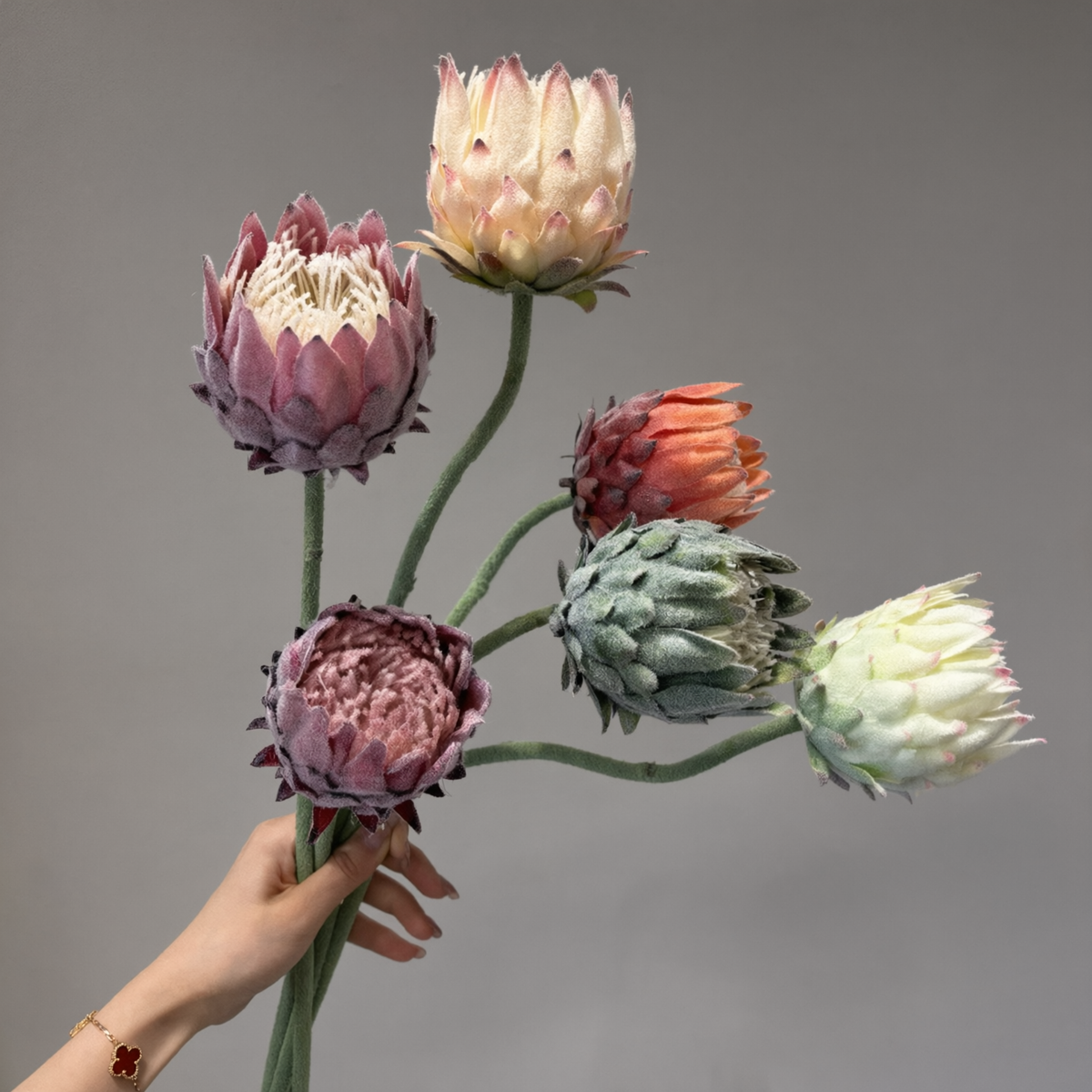
Short answer: To request a quote for an existing FSARCAN item, send the product link or SKU, color, quantity, delivery country and postal code, required date, and any packing or labeling needs. To ask FSARCAN to find a similar artificial flower, send clear reference photos plus the features that must match, the details that can vary, and anything to avoid. Add measurements, quantity range, destination, and timing so the returned options can be compared on the same basis.
You do not need a perfect technical specification before making first contact. A concise, organized inquiry is enough to start. The guide below shows what to include, what a reference photo can and cannot establish, and how to turn a visual idea into a quote-ready sourcing brief.
Choose the Right Inquiry Path
Start by identifying which of these four requests best describes your project. This helps FSARCAN understand whether to quote a known item, search for alternatives, discuss a variation, or begin with samples.
| Request type | Best starting information | Useful result |
|---|---|---|
| Quote an existing FSARCAN item | Product URL or SKU, selected color, quantity, destination, and required date | A quote and confirmation for the identified product and inquiry conditions |
| Find a similar product | Reference photos, must-match features, acceptable differences, measurements, and quantity range | Possible listed or sourced alternatives for comparison |
| Request a variation | Closest product, requested change, color reference, quantity range, and application | A review of whether the requested variation can be explored |
| Sample first | Shortlist, evaluation criteria, destination, and project schedule | A sample route for checking the product before a larger decision |
The Minimum Information for a Useful First Inquiry
If time is limited, send these six items first:
- Product identity: an FSARCAN link or SKU, or one to five clear reference photos.
- Quantity: an exact quantity or a realistic range, stated by stem, bunch, bouquet, box, or another clearly named unit.
- Color: the listed variant, a physical color reference, or an image showing the intended color direction.
- Destination: country and postal code, plus the delivery location type if it affects receiving.
- Timing: the date the goods are needed and whether that date is fixed or flexible.
- Use: wedding installation, florist stock, retail, rental, hotel display, seasonal decor, or another application.
This is a minimum viable inquiry. Add dimensions, finish, construction, packing, labels, and sample requirements to make it quote-ready.
How to Ask for a Quote on an Existing FSARCAN Product
A product screenshot alone can become separated from its page and may not identify the exact variant. Whenever possible, send the current product URL and SKU. State the color and selling unit in writing, especially when a listing includes multiple sizes, head counts, bunches, or packs.
Use this checklist:
- product URL and SKU;
- variant or color name;
- quantity and unit required;
- delivery country and postal code;
- required arrival date;
- whether a sample is needed first;
- inner packing, carton, barcode, tag, or label requirements;
- photos or notes showing the intended application.

For category-specific buying checks, see the FSARCAN guides to artificial rose stems, artificial orchid stems, and artificial peony bouquets.
How to Ask FSARCAN to Find a Similar Product
A similar-product request asks FSARCAN to use your visual and written criteria to look for the closest practical option. It is not a promise of an exact copy. The most useful brief separates visible inspiration from measurable requirements.
Send reference images that you own or have permission to share. When possible, include:
- a full front view against a simple background;
- side and back views that show construction;
- close-ups of petals, leaves, flower centers, and branch joints;
- a ruler, hand, vase, or known object for scale;
- the product in its intended arrangement or setting;
- the original product link if it is available.

What a Reference Photo Can and Cannot Prove
A photo can show visible characteristics such as silhouette, petal shape, apparent color, fullness, relative proportions, and clues about construction. It may help identify a flower category or style direction.
A photo alone cannot reliably prove exact dimensions, material composition, surface treatment, stem strength, packed condition, color under different lighting, durability, certification, supplier, origin, branding rights, or whether two items are made by the same producer. Confirm important attributes through current specifications and, where needed, a physical sample.
Write a Must Match, Can Vary, and Avoid Brief
This three-part format prevents one attractive detail from hiding a critical requirement. It also gives the sourcing team room to propose alternatives without losing the purpose of the request.
| Priority | What it means | Artificial flower example |
|---|---|---|
| Must match | A feature required for the product to work | White phalaenopsis shape, flexible long stem, specified overall length, and no visible glitter |
| Can vary | A detail with an acceptable range | Small variation in leaf count, flower-center tone, packaging layout, or stem shade |
| Avoid | A feature that makes the option unsuitable | High gloss, exposed adhesive, crushed petals, strong blue cast, or oversized leaves |
Use objective descriptions where possible. "Bloom diameter between 10 and 12 cm" is easier to evaluate than "large flower." "Low-sheen petals for close photography" is clearer than "premium look." If a visual match matters more than price, or a target budget matters more than an exact detail, state that priority.
Measurements That Help Identify Artificial Flowers
Different flower formats need different measurements. Include a simple sketch or annotated photo if the shape is difficult to describe.
- Single stem: overall length, usable straight stem, bloom diameter, and bloom depth.
- Branching stem: overall length, main branch points, number of blooms and buds, and widest shaped spread.
- Bouquet or bunch: number of stems or heads, bound-point diameter, overall height, and displayed spread.
- Garland or vine: total length, decorated length, attachment points, branch spacing, and approximate width after shaping.
- Flower wall or panel: panel dimensions, connection method, flower density, edge finish, and viewing distance.
State whether measurements are approximate targets or non-negotiable limits. Do not rely on a photograph with no scale for a dimension-sensitive project.
Quantity, Destination, and Timing Change the Request
You may begin with a quantity range when the design is not final. Make the unit explicit so that "500" cannot be interpreted as 500 flower heads when you mean 500 branching stems or 500 bouquets.
Destination and timing should be included in the first inquiry because product-only and delivered comparisons answer different questions. Ask what the quote includes, which packing assumptions were used, and what still needs confirmation. If your project has a fixed installation or retail launch date, include a separate date for sample approval and a margin for receiving and inspection.
Use Samples to Approve the Actual Product
When finish, color, scale, or construction is important, a sample can turn visual expectations into a physical reference. Evaluate the exact sample under the intended lighting, with the actual vase, fabric, foliage, backdrop, or companion products.
Label the approved sample and record the product reference, color, dimensions, date, and acceptance points. Reconfirm current specifications and availability when placing a later or repeat inquiry. Review the store's current Sample Orders information for the available sample route.

How to Compare Returned Products and Quotes
Put every option into one comparison sheet. A lower number is not a like-for-like result if the selling unit, dimensions, head count, finish, packing, or delivery scope is different.
- same product unit and quantity basis;
- same flower type, dimensions, and head or branch count;
- same approved color direction and finish criteria;
- same inner packing, carton, label, and barcode requirements;
- same destination and stated quote scope;
- same sample or approval requirement;
- clear list of differences, assumptions, and items still to be confirmed.
Copy-and-Paste Template: Existing Product Quote
Subject: Quote request - (product or SKU) - (quantity) - (country)
Product link and SKU:
Color or variant:
Quantity and unit:
Intended use:
Delivery country and postal code:
Required arrival date:
Sample needed first: Yes / No
Packing or labeling needs:
Questions or acceptance requirements:
Copy-and-Paste Template: Similar Product Search
Subject: Similar artificial flower sourcing request - (flower type)
Reference photos or original link:
Intended use:
Must match:
Can vary:
Avoid:
Required measurements:
Material or finish preference:
Color reference:
Quantity range and unit:
Delivery country and postal code:
Required arrival date:
Sample needed first: Yes / No
Packing or labeling needs:
Priority: closest visual match / specification / budget / timing
What Happens After You Send the Inquiry?
FSARCAN can review the brief, identify missing information, and assess whether a listed item or a possible similar option fits the request. Product specifications, availability, quote scope, sampling, packing, and timing should be confirmed for the individual inquiry before the buyer makes a purchasing decision.
A complete brief reduces follow-up questions, but it does not replace sample approval or written confirmation of the final product and order conditions.
Artificial Flower Inquiry FAQ
Can I ask FSARCAN for a product that is not shown in the catalog?
Yes, you can submit a similar-product sourcing request. Send reference photos, measurable requirements, must-match features, acceptable variations, quantity range, destination, and timing so FSARCAN can review possible options.
Is one reference photo enough to find a similar artificial flower?
One clear photo can start the conversation, but front, side, back, detail, and scale views reduce ambiguity. A written must-match, can-vary, and avoid list is more reliable than images alone.
Do I need to know the exact quantity before asking for a quote?
No. A realistic range can support an initial inquiry. State the unit clearly and update the quantity before requesting final confirmation.
Can a similar product be an exact copy of the reference image?
Do not assume so. A similar-product search looks for the closest practical option based on the supplied criteria. Photos do not establish every specification, production source, or intellectual-property right. Confirm the proposed item through specifications and samples.
What is the fastest way to receive a useful reply?
Send one organized message containing the product link or reference photos, quantity and unit, color, measurements, destination, required date, and sample or packing needs. Use the current contact route shown on FSARCAN's Contact Us page.
Start with the FSARCAN catalog, review the current B2B Wholesale information, or send a complete product-sourcing brief through Contact Us.