
How to Buy Artificial Rose Stems in Bulk: Finish, Size & Construction
FSARCAN ·
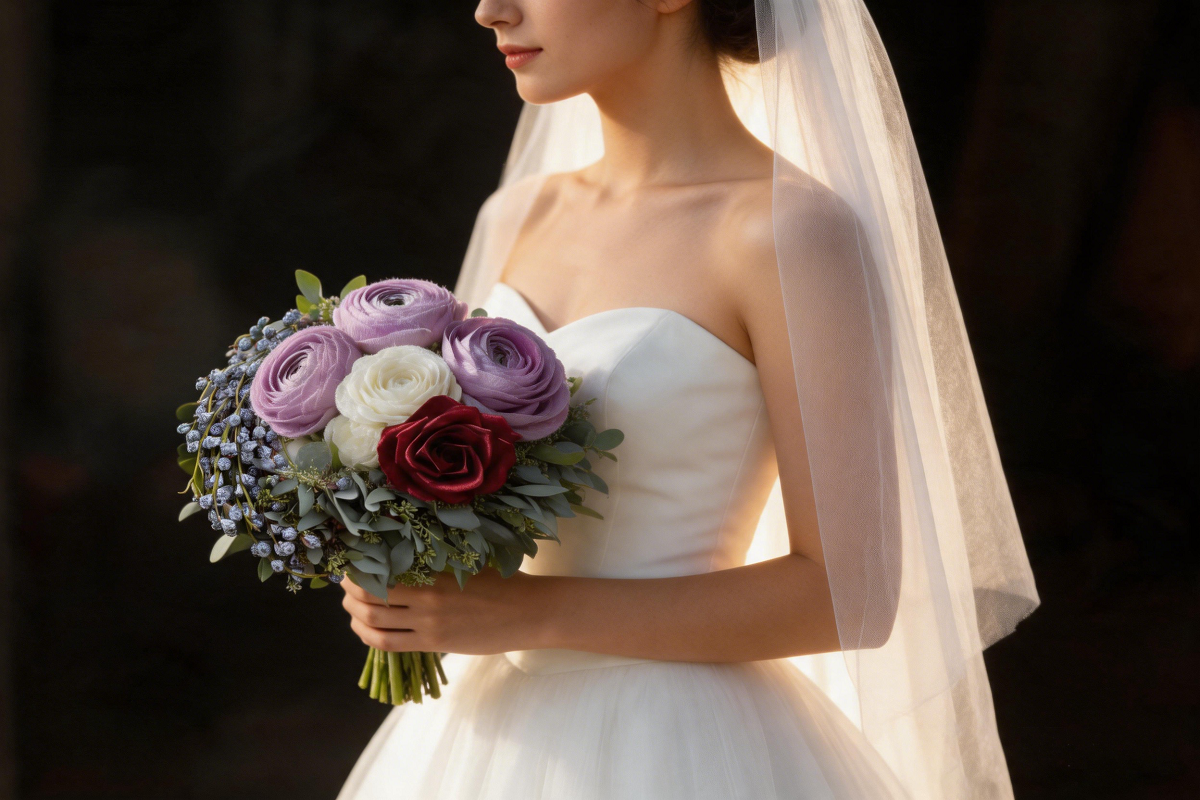
Short answer: Buy artificial rose stems by matching the product to the finished arrangement, not by choosing a material label in isolation. Confirm the selling unit, bloom diameter, total and usable stem length, single-head or branching construction, surface finish, color reference, and packing method. Then approve a physical sample and build one representative bouquet or centerpiece before calculating the full quantity.
Wholesale listings often combine terms such as real touch, silk, velvet, artificial, and faux. These labels help buyers find options, but they do not create a universal quality scale. The sample, specification, and finished design provide the evidence needed for a reliable comparison.
Start With the Arrangement, Viewing Distance, and Selling Unit
An artificial rose used in a bridal bouquet has a different job from one used in a hotel vase, retail display, photo backdrop, or ceremony installation. Define that job before comparing products.
| Application | Priority checks | Representative test |
|---|---|---|
| Bridal or hand-held bouquet | Close-view petal finish, stem grip, weight, color under photography | Build and carry one complete bouquet with the intended ribbon and foliage. |
| Table centerpiece | Bloom scale, side profile, usable stem, guest sightlines | Arrange one table using the actual vessel and seating layout. |
| Tall vase or lobby display | Total length, stem stability, all-angle appearance | Photograph the display from the main entrance and nearby seating. |
| Arch or backdrop | Attachment points, distance impact, color blocking, labor per section | Construct one measured section with the planned mechanics. |
| Retail or rental stock | Labeling, packing recovery, cleaning guidance, reorder consistency | Complete a pack, unpack, display, and repack cycle. |
Also define the selling unit. One quoted piece may mean one single-head stem, one branching stem with two flowers, one bouquet, or one pack. Ask the supplier to state the unit in writing and show every component in a current sample photograph.
Real Touch vs Silk Artificial Roses: What Should Buyers Compare?
Real-touch-labeled and silk-labeled artificial roses should be compared as individual products, not ranked by label alone. Product naming and construction vary. A buyer should inspect the actual petal surface, edges, center, color, flexibility, weight, stem, and response to handling under the intended lighting.
| Catalog label | Useful inspection points | Do not assume |
|---|---|---|
| Real touch or soft touch | Surface feel, sheen, flexibility, creasing, dust pickup, visible coating transitions | A standardized material, better construction, or suitability for every application |
| Silk | Fabric texture, cut edges, petal shaping, color variation, light reflection | That the label identifies the exact fiber content |
| Velvet or flocked | Surface coverage, edge finish, loose fibers, marks after handling, color under flash | That a soft surface automatically looks more realistic |
FSARCAN's catalog includes both a long-stem real-touch-labeled artificial rose and a silk-labeled single-stem rose. Request current specifications and samples for the exact products being compared.


Measure Bloom Size and Stem Length Separately
A large bloom on a short stem and a smaller bloom on a long stem solve different design problems. Record both dimensions instead of using the word "large" as a specification.
The current catalog provides distinct reference points. The 64 cm artificial silk rose lists total stem length in its title, while the 11 cm red rose lists a bloom measurement. These are different measurements and should not be compared as though they describe the same attribute.
For each sample, record:
- total length from stem end to the highest petal;
- usable straight stem below the lowest leaf or branch;
- widest bloom diameter and bloom depth;
- head weight and whether the stem holds the intended angle;
- leaf count, position, finish, and removability if relevant;
- packed dimensions and display dimensions after shaping.
Compare Single-Head and Branching Construction
Single-head stems provide independent placement and are easy to count in a design recipe. A branching or double-head stem may create coverage with fewer main stems, but the two heads may differ in size, stage, height, or direction. Neither format is automatically more economical.

On a branching sample, note the number of open blooms and buds, the distance between branch points, the range of head movement, and the widest shaped spread. Compare the number of complete arrangements produced per carton, not only the number of listed flower heads.
Approve Color With a Physical Reference
Rose colors can appear different across screens, light sources, and camera settings. Approve the sample beside the actual ribbon, fabric, vessel, backdrop, foliage, and companion flowers. Photograph the approved combination with a physical reference in the frame.
For gradient or mixed-color work, compare the position and consistency of color transitions across several units. The gradient pink rose bouquet should be treated as a distinct color construction, not as a direct substitute for a solid pink single stem.
Keep one labeled approval sample when repeat color matters. For a reorder, provide the previous SKU and reference images, then request current confirmation of the product, color, and production sample.
Use a Two-Pass Sample Test
- Design pass: View the rose at guest distance and through the planned camera. Check silhouette, scale, color, petal arrangement, and how it combines with other materials.
- Construction pass: Inspect the center, underside, seams, petal edges, adhesive, stem covering, wire behavior, leaves, and branch joints. Record any visible marks or changes after normal shaping.
The design pass answers whether the rose works in the finished scene. The construction pass helps the buyer document what must remain consistent in the approved order. Both are needed for a useful wholesale comparison.
Build One Arrangement Before Calculating Quantity
There is no universal number of artificial rose stems for a bouquet, centerpiece, or arch. Bloom diameter, stem construction, foliage density, vessel size, viewing distance, and design style all change the quantity.
- Choose one representative bouquet, table, vase, or measured installation section.
- Use the intended mechanics, greenery, filler, ribbon, and container.
- Build to the approved dimensions and photograph every important angle.
- Count each exact rose SKU and every supporting component.
- Multiply the approved recipe by the number of matching units.
- Add replacement stock according to the buyer's handling and reuse policy.
For broader event planning, see How to Choose Artificial Flowers for Bulk Wedding Orders. To compare another full-petalled category, use the Artificial Peony Bouquets Buyer's Guide.
Inspect a Test Carton
A single sample establishes the target. A test carton shows whether the selling unit, color, shape, and packing are consistent across multiple pieces. Have the receiving team count, unpack, reshape, inspect, and repack the carton using the planned workflow.
Record the unit count, bloom dimensions, color consistency, compressed petals, loose components, bent stems, surface marks, reshaping time, carton dimensions, gross weight, inner packing, and labels. Agree in advance how shortages or damage will be documented and resolved.
Send a Quote-Ready Artificial Rose Specification
- product link, SKU, and approved sample reference;
- intended application and viewing distance;
- quantity by product and color;
- selling unit and single-head or branching construction;
- required bloom diameter, total length, and usable stem;
- finish label plus the sample details that must be matched;
- carton quantity, packing method, and labeling needs;
- delivery country, postal code, event date, and sample deadline;
- lead-time and landed-cost details needed for comparison.
Artificial Rose Stems FAQ
Are real touch artificial roses better than silk roses?
Not automatically. These are catalog labels, and construction varies by product. Compare physical samples for petal finish, edges, center detail, flexibility, color, stem behavior, packing recovery, and suitability for the intended viewing distance.
What measurements matter when buying artificial rose stems in bulk?
Record the selling unit, total length, usable straight stem, bloom diameter and depth, head count, branch construction, leaf placement, shaped spread, and packed dimensions.
Is a double-head artificial rose cheaper to use than two single stems?
Not necessarily. Build the same approved arrangement with both options and compare the product units, labor, placement control, and final coverage required.
How many artificial roses are needed for a wedding bouquet?
There is no universal count. Build one full bouquet using the exact rose SKU, foliage, filler, mechanics, and desired diameter. Use that approved physical recipe to calculate the order.
How should buyers approve artificial rose colors?
Review physical samples with the complete palette under the planned lighting and camera conditions. Keep a labeled approval sample and reconfirm the current color for later orders.
Compare FSARCAN's long-stem real-touch-labeled rose, 64 cm silk rose, 11 cm red rose, and Austin-style rose, or request a current B2B wholesale quote.